Why “More Blog Posts” Isn’t a Growth Strategy
Publishing more rarely fixes flat growth. Learn why volume without strategy fails, and what actually moves organic results—structure, intent and conversion.
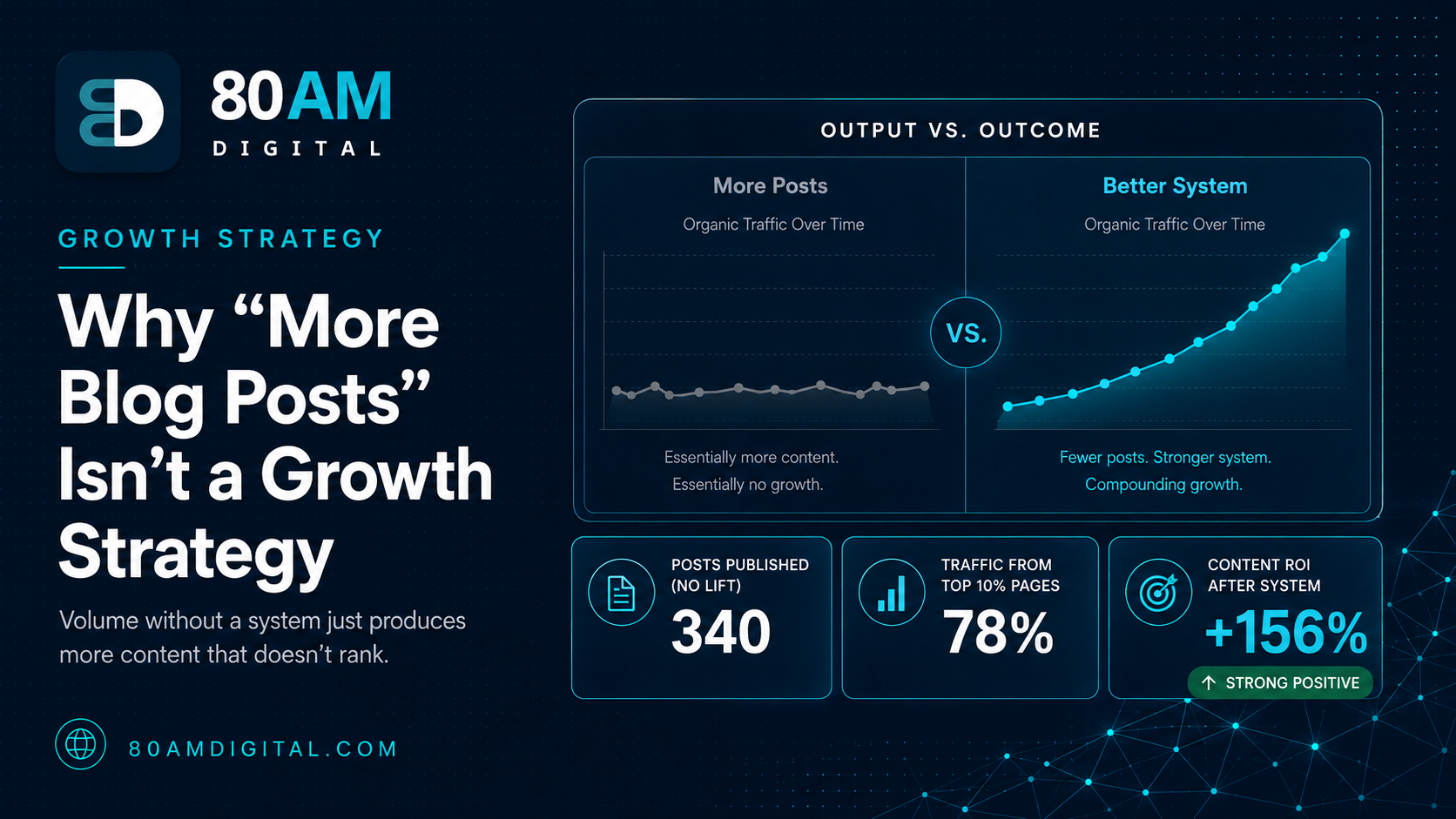
The most common content strategy in practice is: publish more. More posts, more topics, higher cadence, bigger content team. The assumption is that traffic scales with output — that if the site is flat, the solution is more content.
It’s an understandable assumption. It’s also wrong in most cases. And the sites that pursue it hardest are often the ones sitting on content libraries of two hundred posts with traffic they can’t explain and conversions they can’t attribute.
Volume is a multiplier. It amplifies what’s already working and accelerates what’s already broken. Before increasing output, it’s worth understanding whether the existing approach is working. This article covers what more content actually solves, the volume trap that publishing without strategy produces, what actually moves organic results, and a worked example of a site that fixed its existing library instead of expanding it.
The Short Version
More content only fixes one problem: genuine topical coverage gaps on a site that already has solid technical health, structure, and conversion paths. For everything else — keyword cannibalisation, thin content accumulation, orphaned pages with no internal links, diluted topical focus — publishing more just scales the existing problem. Audit what you already have before adding to it: which pages rank and why, which get impressions but no clicks, which get traffic but no conversions, and which cannibalise each other.
Table of Contents
What “More Content” Actually Solves
More content solves one specific problem: insufficient topical coverage. If your site has a clear cluster structure, strong technical health, well-matched intent, and pages that convert — but there are gaps in the topic map where searches go unanswered — then yes, more content fills those gaps and extends reach.
That’s a narrow problem. Most sites with flat traffic have a different set of problems: wrong topics, wrong format, technical constraints preventing indexation, no internal link structure connecting the content, or content that earns traffic but doesn’t convert it. Publishing more content doesn’t fix any of those. It just creates more instances of the same problem at scale.
The Volume Trap
There’s a specific failure mode that publishing volume without strategy produces, and it compounds over time:
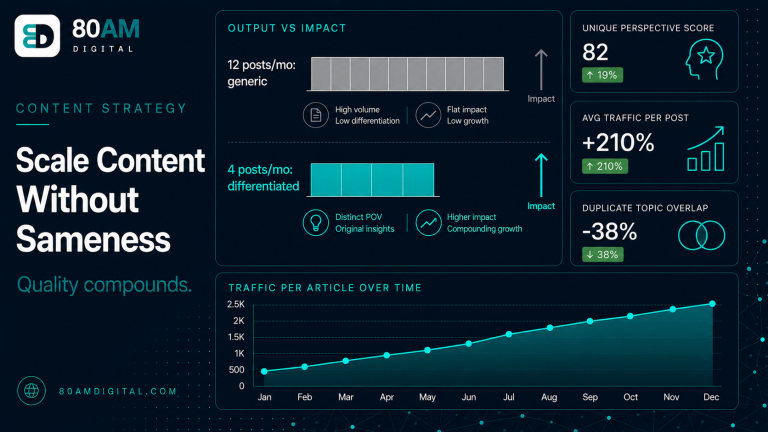
Keyword cannibalism: Multiple posts targeting similar queries compete with each other rather than reinforcing each other. Google can’t determine which is the primary source of authority on the topic. Rankings are split or suppressed.
Thin content accumulation: Posts written to a target word count rather than to a topic’s actual depth produce pages that Google classifies as low-value — not enough to merit strong ranking, too many to ignore at the site level. The result can be a site-wide authority suppression that affects even the strong pages.
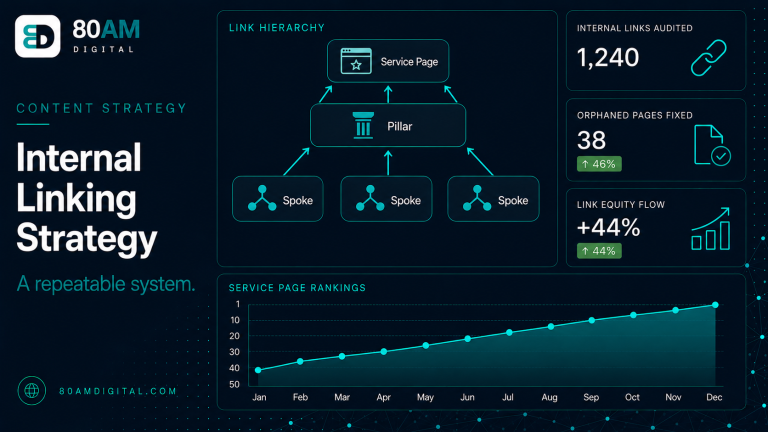
Orphaned archives: Published content with no internal links pointing to it and no structured connection to the site’s primary topics accumulates as dead weight — pages that get crawled occasionally but never rank, contributing nothing to the site’s topical authority.
Diluted focus: A content calendar that covers every loosely related topic diffuses the site’s topical signal. Google is better at rewarding depth than breadth. A site with fifty posts on a specific topic outranks one with five hundred posts spanning twenty loosely related topics.
| Failure mode | What it looks like |
|---|---|
| Keyword cannibalism | Several posts split rankings for the same query |
| Thin content accumulation | Posts hitting a word count, not a topic’s real depth |
| Orphaned archives | Pages with zero internal links, crawled but never ranking |
| Diluted focus | Broad topic coverage with no depth anywhere |
What Actually Moves Organic Results
The factors that consistently correlate with organic growth are not volume-based:
Technical health: A site that can be crawled and indexed properly benefits from any content added to it. A site with crawlability constraints doesn’t benefit from more content — the content gets published and ignored. Fix the foundation first.
Topical depth and cluster structure: A set of fifteen well-connected, comprehensive articles on one topic outperforms fifty disconnected posts covering fifteen different topics. Depth within a topic area is what builds the authority signal that moves rankings on competitive keywords.
Intent alignment: Content that matches what searchers are actually trying to accomplish at the query level earns engagement signals (dwell time, low bounce rate, return visits) that reinforce rankings. Content that attracts a query but doesn’t serve the underlying intent earns the opposite — and that negative signal compounds.
Conversion architecture: Organic traffic that doesn’t produce leads or revenue is a cost, not an asset. Content that earns traffic but has no path to conversion is content that’s been produced for its own sake. The pages worth building are ones where the reader, having consumed the content, has a clear and obvious next step toward the site’s primary commercial goal.
The Audit Before the Calendar
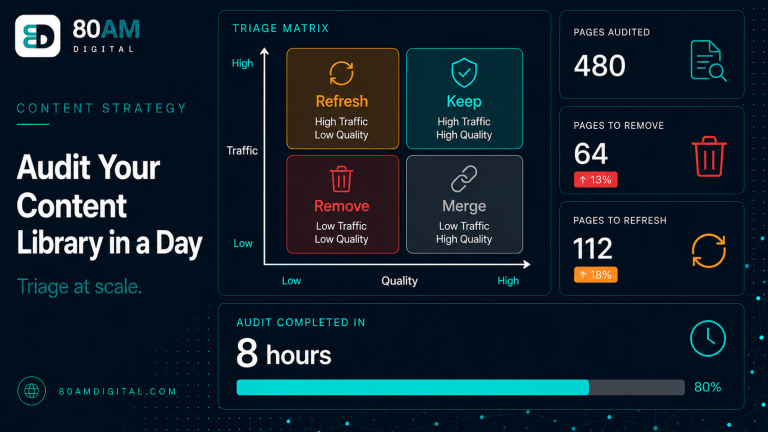
The most useful thing a site with flat organic growth can do before adding more content is audit what it already has:
- Which pages are ranking, for what, and why?
- Which pages have impressions but no clicks — and why?
- Which pages have traffic but no conversions?
- Which pages are cannibalising each other’s keywords?
- Which pages have no internal links and no topical connection to anything else on the site?
The answers to those questions usually produce a shorter list of higher-impact actions than “write twenty new posts” — and those actions tend to move results faster, because they’re fixing existing assets rather than building new ones from scratch.
For how to build a content system that does compound over time, see topic clusters for AI search and leading and lagging SEO indicators.
A Worked Example
A professional training company had published 280 blog posts over four years and was budgeting for a content agency to add 10 more per month, hoping volume would finally break a multi-year traffic plateau. Before signing the contract, they ran the five-question audit above.
The results were stark: 60 posts were cannibalising each other across just 12 core topics, 90 had zero internal links pointing to them from anywhere else on the site, and of the 40 highest-traffic posts, 31 had no clear next step or CTA at all — readers arrived, read, and left with nothing to click. Only a genuine handful of topics in their niche were actually uncovered.
Instead of the new content contract, the team spent two months consolidating the 60 cannibalising posts into 12 authoritative ones, adding internal links to the 90 orphans (recovering several that started ranking again within weeks), and adding a clear CTA to the 31 top-traffic pages with none. Organic conversions rose 45% over the following quarter with zero new content published — confirming the plateau had never been a coverage problem in the first place.
Frequently Asked Questions
Start With What’s Broken, Not What’s Missing
When organic traffic is flat, the instinct is to add. Usually the better answer is to fix — fix the technical foundation, fix the internal link structure, fix the content that’s ranking but not converting, fix the intent mismatch on pages that are close to page one. The content gaps are real, but they compound on top of a working system. Without the system, filling the gaps just produces more underperforming content.
If you’d like help diagnosing what’s actually limiting organic growth on your site before deciding on the next content move, request a site audit.