How Much Does SEO Cost — and What Actually Drives the Price

How Much Does SEO Cost — and What Actually Drives the Price

SEO pricing ranges wildly because the work does. Learn what drives the cost — scope, site size, competition — and how to tell value from an overpriced retainer.

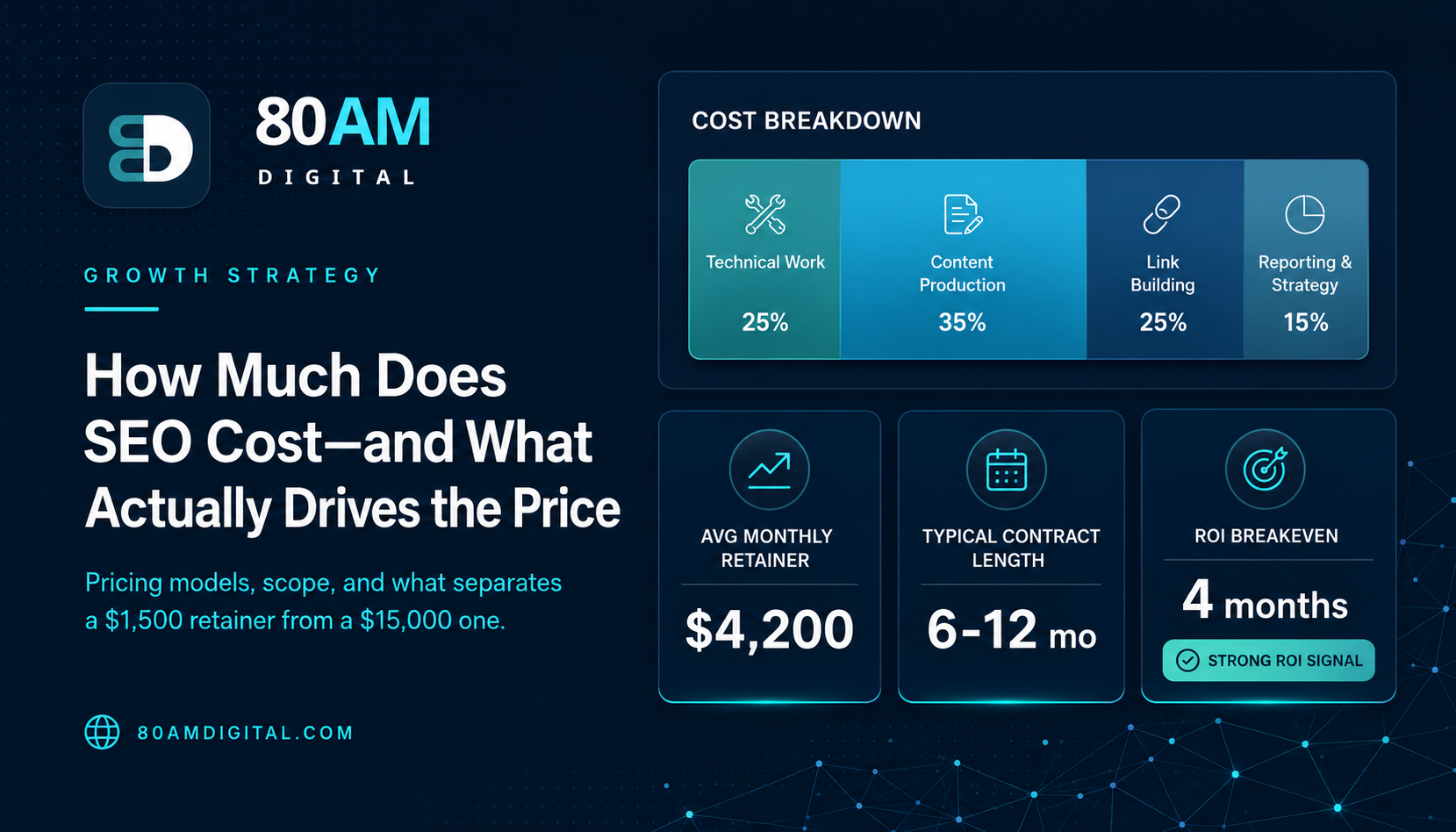
SEO costs between $500/month and $20,000+/month depending on three things: the size and complexity of your site, how competitive your market is, and how much work the provider actually does. The range is that wide because the word “SEO” covers everything from a monthly rankings report to a full-stack technical and content programme. This guide cuts through the pricing confusion — what’s reasonable, what drives the number up, and how to tell whether a quote represents real value or a rubber-stamp retainer.

The Short Version

  • Legitimate SEO retainers run $1,500–$10,000+/month depending on site complexity, market competition, and whether content production is included.
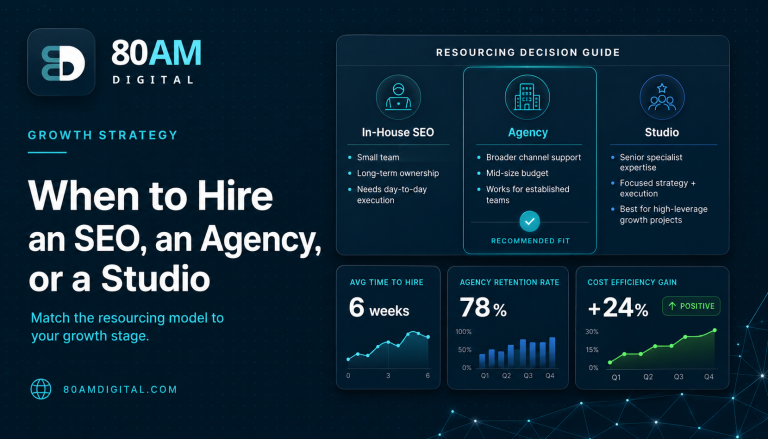
  • The $500/month package almost never produces measurable results — the budget funds a report, not the actual work.
  • Price is driven by competitive landscape, site size, technical debt, and scope — not provider type alone.
  • Evaluate by what happens each month, not what’s promised in a pitch deck.

What SEO actually costs: the real ranges

These are the market rates for legitimate SEO work in 2026 — not the $99/month packages, not the enterprise contracts with agency overhead baked in. Real work, real prices.

Provider type Typical range What this usually includes
Freelance specialist $75–$200/hr
or $1,000–$3,500/mo
Technical audits, keyword research, on-page recommendations — typically one discipline. Best for specific, bounded problems.
Small agency / studio $2,000–$8,000/mo Technical SEO + content strategy + reporting. Fewer account managers, more execution. Best for businesses that need breadth without enterprise pricing.
Mid-size agency $5,000–$15,000/mo Larger team, more channels, more process. More overhead. Best for businesses with significant budgets who want full-service coverage and don’t mind paying for account management.
Enterprise agency $10,000–$40,000+/mo Full teams, specialists per discipline, complex multi-market programmes. Best for large sites (100K+ pages), international, or complex enterprise orgs where coordination is the main cost.
Project-based (audit, migration, etc.) $1,500–$15,000
one-time
Defined scope, defined deliverable. An SEO audit, a site migration, a content architecture, a CRO audit. Best when you have a specific problem that doesn’t need ongoing management.

The $500/month “SEO package”

These exist and they’re almost always a monthly report attached to automated tools, with minimal human expertise applied. At that price, you’re paying for someone to produce a PDF. The fixes in the PDF don’t get implemented, the strategy doesn’t get developed, and the $500 disappears with nothing moving. It’s not cost-effective — it’s just cheap.


What drives the price

Two sites in the same industry can receive quotes that are $5,000/month apart for legitimate reasons. The variables that move the number:

What drives SEO pricing

Site size
A 10-page service site takes a fraction of the work of a 50,000-page ecommerce site. Crawl analysis, indexing issues, and content audits all scale with URL count.
Market competition
Ranking for “SEO agency” in a major market requires more content, more authority-building, and more ongoing work than ranking for “SEO for landscaping businesses in Austin.”
Scope of services
Technical SEO alone is cheaper than technical + content + conversion optimisation. Providers who do all three well under one roof charge for that coordination — and it’s often worth it.
Current site health
A site with major technical problems (crawl errors, indexing failures, slow Core Web Vitals) needs remediation before strategy can compound. That fixes work costs more upfront.
Speed of results needed
Organic SEO is slow by nature. If you need results faster, the scope (and cost) of the work goes up — more content, more link building, more CRO — not because the rate is higher but because more gets done.
Provider overhead
Large agencies carry account managers, sales teams, and office costs that get priced into retainers. Studios and specialists with lower overhead can often charge less for the same or better execution.

The three pricing models and what you’re actually buying

Monthly retainer

The most common model. You pay a fixed monthly fee for an ongoing scope of work. The key question with any retainer isn’t the price — it’s what the hours are actually doing.

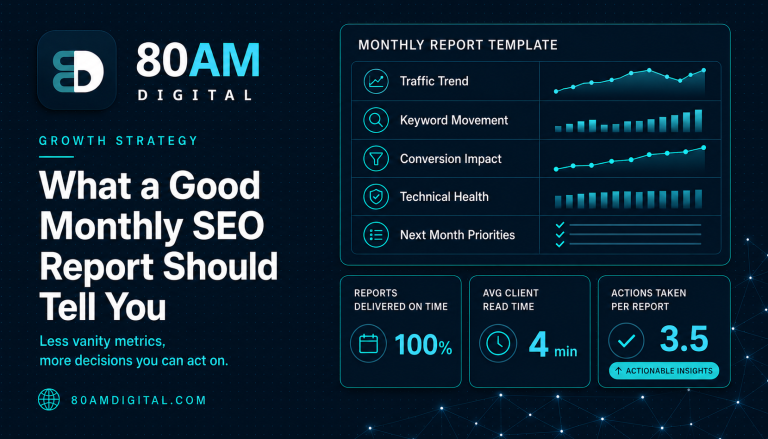
A good retainer produces: a technical audit and fix implementation in month one or two, an ongoing content programme based on a clear cluster architecture, regular performance reviews against the five scoreboard metrics, and CRO input on pages that rank but don’t convert. A bad retainer produces: a monthly report, a list of “recommendations,” and not much else.

The right question to ask before signing: “What does month two look like? What will have been delivered, and what metrics will we be tracking?” If the answer is vague, the retainer is vague.

Project-based

A fixed price for a defined deliverable — an audit, a migration, a content architecture, a set of pillar articles. Project pricing is cleaner when the scope is known, and it removes the risk of paying a monthly fee for work that doesn’t progress.

The limitation: SEO is ongoing. A project that ends with a list of recommendations doesn’t produce results unless someone implements them. The most effective pattern is a project (audit + prioritised action plan) that transitions into a retainer or in-house execution once there’s clarity on what needs doing.

This is why we start every engagement with an audit — it gives you a clear picture of the highest-impact work before any retainer commitment. See why we don’t start with a retainer.

Hourly / ad hoc

Useful for specific technical questions, reviewing a migration plan, or getting a second opinion on a content strategy. The going rate for experienced specialists is $100–$200/hour. Be realistic about how much you’ll need — SEO problems that feel simple often aren’t, and a diagnosis that takes 30 minutes can surface remediation work that takes weeks.


Warning signs: what cheap SEO costs you

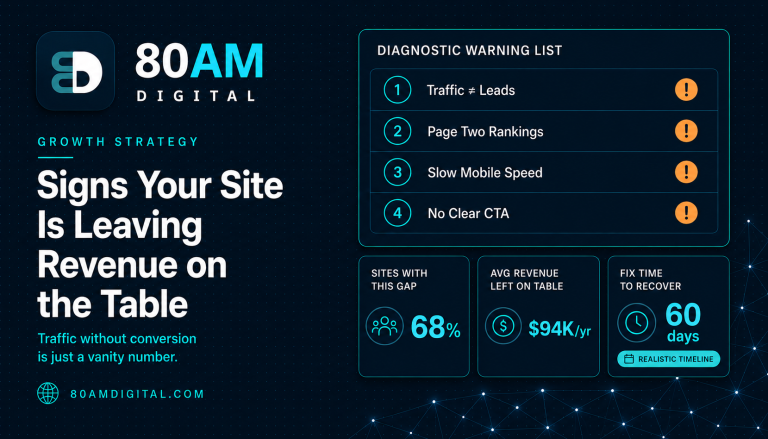
Cheap SEO isn’t cost-neutral — it has a cost, and it’s often higher than the retainer you would have paid for legitimate work.

What they sell What actually happens What it costs you
“Guaranteed first-page rankings” Ranks you for keywords nobody searches, or uses manipulative tactics that work briefly and then trigger a manual penalty Time cleaning up a penalty, lost rankings on real keywords, potentially a manual action in Search Console that takes months to recover
Bulk link packages (“1,000 links for $299”) Low-quality links from PBNs or link farms that violate Google’s spam policies Disavow work, ranking drops, possible manual penalty — all need fixing before real work can have any effect
“We’ll write 20 articles/month” (at $50 each) AI-spun or template content that duplicates what’s already ranking, with no original angle or expertise Hundreds of thin pages that depress average quality score, dilute crawl budget, and can trigger a helpful-content demotion
Monthly report with no implementation A PDF that lists things to fix, that nobody implements, for 12 months The full retainer cost paid for zero change in rankings, traffic, or revenue. Months of compounding growth opportunity lost.

How to evaluate whether a quote is good value

Price and value aren’t the same number. A $3,000/month studio doing focused, prioritised work often delivers more than a $10,000/month agency split across 12 clients with a junior account manager on your account. Here’s the evaluation framework:

Six questions to ask before signing

1
Who actually does the work?
The person who presents gets replaced by a junior after the sale. Ask who will be on your account day-to-day and check their work history.
2
What does the first 90 days look like?
A good provider can tell you exactly what gets done in months one, two, and three. Vague answers about “getting to know your site” for the first quarter are a red flag.
3
What metrics will you report on?
If the answer is rankings and traffic, ask how those connect to revenue. A provider who can articulate the path from keyword position to lead or sale understands what the work is for.
4
Do you start with an audit?
Any provider who proposes a retainer before understanding your current technical state, content gaps, and competitive position is working from guesswork. Insist on a diagnostic phase first.
5
Can I see examples of work done, not just results claimed?
Results screenshots can be faked and context can be missing. Ask to see a sample technical audit, a content brief, a cluster architecture. That’s what you’re actually buying.
6
What’s the exit clause?
A provider confident in their work doesn’t need to lock you in for 12 months upfront. 30–60 day notice terms are reasonable. Longer lock-ins with no deliverable milestones are a sign of misaligned incentives.

Frequently asked questions

For most businesses, both channels earn their keep at different stages and for different purposes. Paid search delivers traffic immediately and stops the moment you stop paying. SEO builds a compounding asset — traffic that grows over time without continuous spend. A realistic view: paid search is rent, SEO is ownership. Most businesses with budget run both, but if you’re choosing, SEO has a better long-term ROI for informational and consideration-stage content; paid is more efficient for bottom-funnel terms with high commercial intent and short purchase cycles.

On a new or weak domain, expect meaningful traffic movement at six to nine months. On a site with existing authority and content, good technical work can produce visible changes in two to four months. The timeline depends heavily on site health at the start, how competitive the target keywords are, and how quickly technical fixes get implemented. Anyone who promises “rankings in 30 days” is targeting keywords nobody searches or using tactics that create short-term wins and long-term problems.

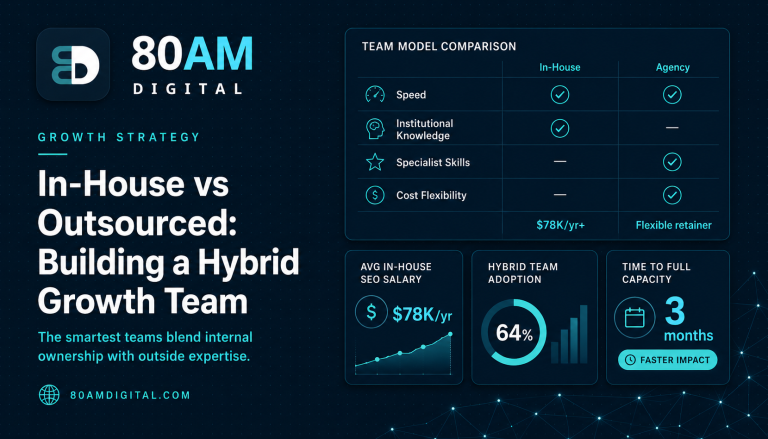
Neither is categorically better — it depends on your stage, budget, and how much SEO is central to your growth model. In-house gives you embedded context and faster implementation; outsourced gives you specialist depth and external perspective that internal teams often can’t maintain. The most effective setups for growth-stage businesses are usually hybrid: a specialist partner for strategy, audits, and content, with in-house ownership of implementation. We cover the full decision in When to hire an SEO, an agency, or a studio.

In a competitive market, $1,500–$2,000/month is about the floor for legitimate work that moves metrics. Below that, the hours available aren’t enough to do both strategy and implementation. That said, a project-based engagement — an audit plus an action plan — can deliver significant clarity for a one-time investment of $1,500–$3,000, and lets you execute in-house against a clear brief rather than paying an ongoing retainer before you know what the problems are.


The honest answer to “how much does SEO cost?” is: enough to do real work. The right number for your situation depends on your site’s current state, your market, and what you’re trying to achieve. The best starting point is always a diagnostic — understanding what your site actually needs before committing to a scope of work.

If you want to know what your site specifically needs and what that work realistically costs, an organic growth audit gives you that clarity before any retainer conversation.
Similar Posts