SEO for SaaS: Why It’s Different and How to Do It Right
SaaS SEO has different economics, different conversion goals, and different content needs than other businesses. Here’s a framework that matches how SaaS actually grows.
SaaS SEO follows the same technical fundamentals as any other organic search programme — crawlability, relevance, authority. But the strategy is different in ways that matter. The conversion goals are different (trial signups or demo requests, not immediate purchase). The content needs are different (comparison and alternative content performs heavily at BOFU, which is unusual in other verticals). The economics are different (customer lifetime value is high enough to justify long organic acquisition timelines). And the competitive landscape is different (incumbents with large content libraries, well-resourced competitors, and often a product-led growth dynamic that creates its own SEO surface area).
An SEO strategy built for an ecommerce brand or a local services business won’t transfer to SaaS without significant modification. This is the SaaS-specific framework, plus a worked example of how one company applied it to its content mix.
The Short Version
SaaS SEO needs content at every funnel stage with a different conversion goal at each — TOFU converts to email, MOFU to demo/trial, BOFU (competitor alternatives, pricing, reviews) to trial or sales conversation. “[Competitor] alternatives” pages are consistently among the highest-converting content in SaaS and deserve disproportionate investment relative to their traffic volume. Product-led SaaS companies with public, shareable outputs (templates, published docs) have organic surface area most other business models don’t — audit and optimise it. Customer documentation is part of the SEO strategy, not separate from it.
Table of Contents
The SaaS Conversion Funnel Is Not One Conversion
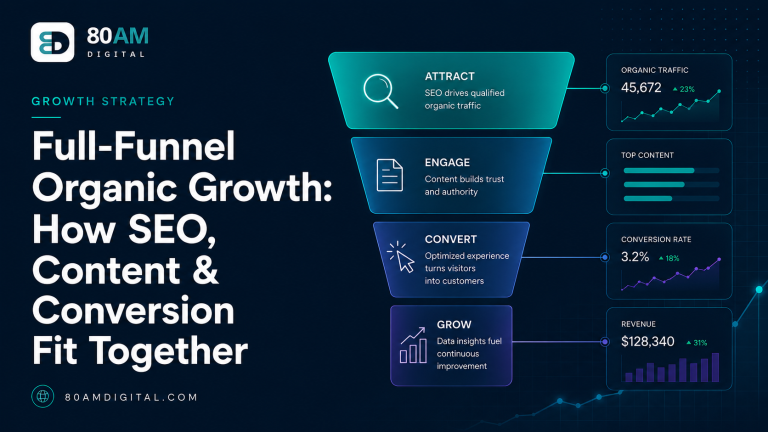
For most SaaS products, organic search contributes at two points in the funnel: early research (informational content that builds brand awareness and establishes expertise) and late evaluation (comparison content, alternative pages, and review-driven queries where the prospect is choosing between vendors). The content strategy and keyword targeting need to reflect both, because the economics of capturing a prospect early vs late are different.
TOFU content: informational articles about the problem the product solves. These drive high traffic volume, low conversion rate, and are valuable primarily for brand building and retargeting list building. Don’t optimise these pages for trial signups — optimise them for the next step in the journey (email capture, related content, relevant case study).
BOFU content: “[your product] vs [competitor]”, “[competitor] alternatives”, “[your product] pricing”, “[your product] review”, “[your product] for [specific use case]”. These drive lower traffic volume but much higher conversion rate. A prospect typing “[your product] vs [competitor]” is actively evaluating — they already know the category, they’ve identified you as an option, and they’re choosing. This content deserves disproportionate attention relative to its traffic volume.
| Funnel stage | Example content | Right conversion goal |
|---|---|---|
| TOFU | Problem-awareness articles | Email capture, not trial signup |
| MOFU | Category education, comparison guides | Demo request or trial signup |
| BOFU | Competitor alternatives, pricing, reviews | Trial signup or sales conversation |
Product-Led Growth Creates Unique SEO Surface Area
If your SaaS product has a freemium tier, a public output (pages users can share externally), or a template library, you have organic search surface area that most other business models don’t. Notion’s published pages, Canva’s design templates, Figma’s community files, Airtable’s template gallery — these generate massive organic reach by creating thousands of indexable pages that live at the intersection of user-generated content and SEO.
For SaaS companies with product-led growth, audit what’s publicly indexable from your product and whether it’s currently generating organic traffic. If your product creates shareable outputs, optimising those outputs for search (structured headings, good title tags, schema markup) can unlock organic acquisition at scale with minimal content production overhead.
Competitor and Alternative Pages
In SaaS, “[brand] alternatives” is consistently one of the highest-converting keyword categories. Someone searching for “[competitor] alternatives” is dissatisfied with the incumbent or evaluating switching — they’re highly motivated and have demonstrated category intent. Publishing well-optimised alternative pages that position your product honestly against the alternatives (including naming competitors directly and explaining the trade-offs) captures this audience at the exact moment they’re most likely to convert.
This approach requires editorial honesty to be effective: a page that just says “we’re better at everything” isn’t useful and doesn’t rank well. A page that explains clearly which scenarios your product is best for, which it isn’t, and how it compares on specific dimensions that matter to the buyer — that page serves the search intent, earns organic rankings, and converts better because it helps the prospect make a confident decision.
Content That Serves the Entire Customer Lifecycle
SaaS products need content that serves prospects, but also content that serves customers — and the organic search footprint of customer-facing content is often underestimated. “How to [do X in your product]”, “[your product] integrations”, “[your product] API documentation”, “[your product] use cases for [role]” — these drive organic traffic from existing customers and from prospects who discover your product through its feature documentation.
Customer success and product documentation that’s publicly indexed is an SEO asset. It demonstrates product depth (which signals confidence), it captures feature-specific search intent that competitors without strong documentation miss, and it reduces support volume while building SEO authority. Treat your help centre and documentation as part of your SEO strategy, not a separate system.
For the content production system that supports a SaaS content programme, see scale content without sameness and topic clusters for AI search.
A Worked Example
A project management SaaS with a free tier had built a content library almost entirely of TOFU articles (“how to manage a remote team,” “what is agile project management”) and put the same trial-signup CTA on every single one. Trial signups from organic were low relative to traffic, and the team had begun to conclude that organic simply wasn’t a strong channel for them.
An audit found zero competitor alternative pages despite three well-known incumbents in their category, and zero MOFU comparison or use-case content. The TOFU pages were also being measured against trial signup, a goal mismatched to that content’s actual job. The team restructured: TOFU CTAs switched to email capture, six “[competitor] alternatives” pages were built with honest, specific comparisons, and five use-case pages targeting specific roles were added at MOFU.
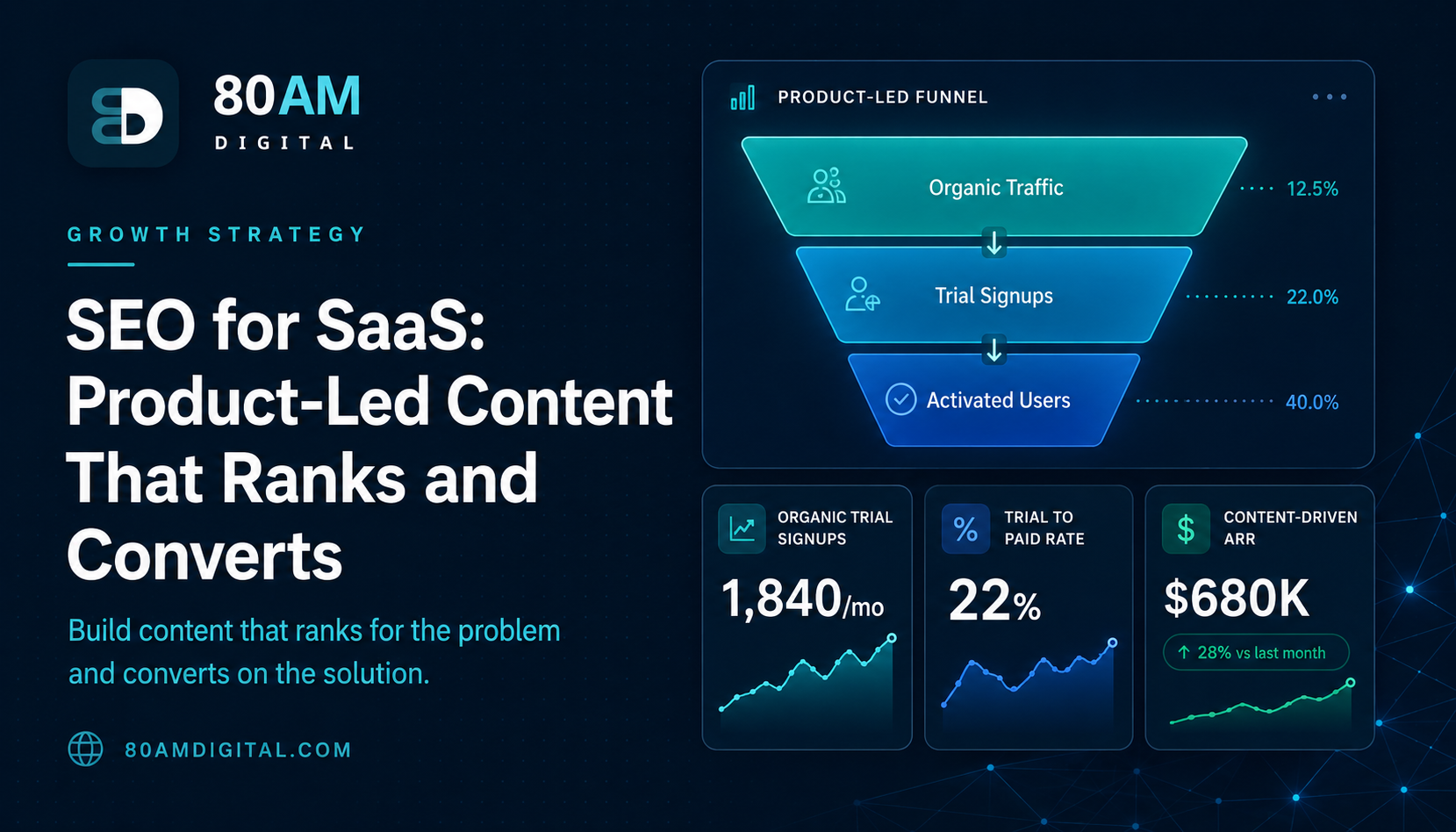
Within five months, the six alternative pages alone — representing under 8% of total organic traffic — were generating over 35% of organic trial signups, confirming the BOFU-disproportionate-value pattern described in this article. Reported organic conversion rate also improved simply from measuring each content type against its correct goal, even before any of the new content had time to compound further.
Frequently Asked Questions
The Long Game That SaaS Can Afford
SaaS is one of the few business models where the economics of organic search fully justify the investment timeline. High LTV, low marginal cost per additional customer, and a recurring revenue model that makes each organically acquired customer worth significantly more than what paid acquisition economics would suggest. The SaaS companies that build dominant organic search programmes treat content as compounding infrastructure, not a campaign. Every piece of well-executed content continues generating trials and signups for years, at near-zero marginal cost per acquisition over time.
If you’d like help designing an SEO programme that fits your SaaS business model and growth stage, get in touch.