SEO for DTC and Ecommerce: Where Growth Really Comes From
For DTC and ecommerce, most organic growth comes from category pages and technical health—not the blog. Learn where to actually focus SEO effort for revenue.
Most ecommerce SEO advice is written about the blog. Content strategy, topic clusters, publishing cadence — useful, but rarely where DTC organic revenue actually comes from. For most ecommerce sites, the highest-revenue organic traffic comes from category pages and product pages ranking for transactional and commercial investigation queries, not from blog content.
This guide covers where to focus SEO effort for DTC and ecommerce brands — specifically the areas that drive measurable revenue growth, ordered by where to start, plus a worked example of a brand that reallocated effort accordingly.
The Short Version
Fix technical health first (faceted navigation, variant duplication, pagination, Core Web Vitals) — without it, nothing else can rank. Then optimise category pages, the highest-value SEO asset on most ecommerce sites, followed by product pages with proper structured data. Blog content comes last and only earns its place if it links clearly into the commercial category structure — disconnected blog traffic generates awareness, not revenue. Established DTC brands with a functioning programme typically see organic contribute 25–40% of total revenue.
Table of Contents
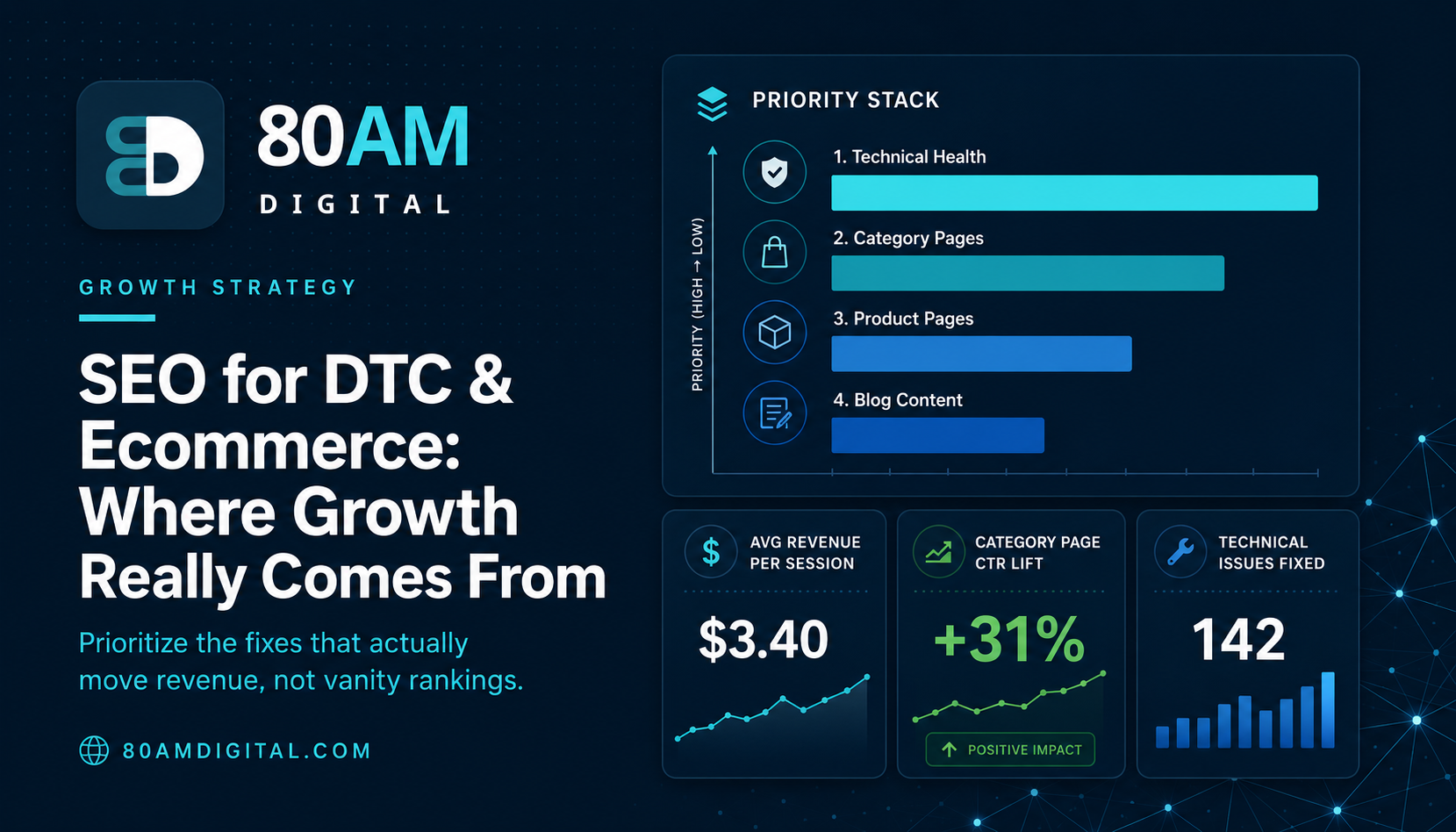
| Priority | Page type | Why it comes in this order |
|---|---|---|
| 1 | Technical health | Nothing else can rank without it |
| 2 | Category pages | Highest-value SEO asset for most ecommerce sites |
| 3 | Product pages | Most specific transactional queries, richest schema potential |
| 4 | Blog content | Only valuable if it links into the commercial structure above |
Priority 1: Technical Health and Crawlability
Before any keyword strategy or content plan, ecommerce sites need a technical foundation that allows Google to crawl and index all commercial pages efficiently. Ecommerce sites have specific technical challenges that service sites don’t:
- Faceted navigation: Filter and sort parameters create thousands of near-duplicate URLs that can exhaust crawl budget and dilute indexation. Most of these should be noindexed or canonicalized to the base category URL
- Product variant pages: Colour, size, and configuration variants often create duplicate or thin content issues — canonical tags pointing to the primary product URL prevent this from cannibalising rankings
- Pagination: Category pages with pagination need clean implementation — rel=”next”/”prev” is deprecated, so canonical strategy or a proper sitemapped-page structure is needed
- Core Web Vitals: Mobile LCP and INP are particularly impactful on product pages — slow load times directly reduce conversion rates on the pages with the most revenue potential
Fixing these issues first means any keyword or content work that follows lands on a foundation that can actually rank.
Priority 2: Category Page Optimisation
Category pages are the highest-value SEO asset on most ecommerce sites. They target the commercial investigation queries (“women’s trail running shoes”, “organic sports tape”, “resistance bands for beginners”) that searchers use when they’re evaluating options before buying.
Most category pages are underoptimised: they have a page title and 200 words of template copy at the bottom that Google ignores. The improvements that move rankings:
- H1 and title tag: Match the language searchers use — if they search “trail running shoes women” not “women’s trail running footwear collection,” the page title should reflect that
- Introductory copy above the product grid: 100–200 words that answer “what is this category and who is it for” — this helps Google understand topical relevance and gives searchers context when they land from a SERP
- Internal links from other pages: Category pages rarely have strong internal link structures supporting them — adding links from blog content and the homepage to the highest-value category pages passes authority where it matters most
- Structured data: ItemList schema on category pages can produce rich results that improve CTR from the SERP
Priority 3: Product Page Optimisation
Product pages target the most specific transactional queries (“buy Balega Hidden Comfort socks”, “RockTape kinesiology tape 5m roll”). They also carry the richest potential for structured data — Product schema with price, availability, and review markup can earn rich results that significantly increase CTR.
The most common product page SEO issues: duplicate or thin descriptions (manufacturer copy used across multiple sites), missing structured data, and weak meta titles that don’t include the specific product attributes searchers use to differentiate.
Priority 4: Blog Content That Connects to Commercial Pages
Blog content for ecommerce is most valuable when it creates a structured path from informational queries to commercial pages. A post answering “how to choose trail running shoes for beginners” earns informational traffic — and if it links clearly to the relevant category page with a contextual recommendation, it connects that traffic to the purchase path.
The mistake to avoid: publishing blog content disconnected from the commercial category structure. A library of informational posts that don’t link to product or category pages generates traffic without supporting revenue — it’s the organic equivalent of a print ad that doesn’t mention where to buy.
For the broader growth strategy context, see leading and lagging SEO indicators and signs your site is leaving revenue on the table.
A Worked Example
A DTC sports recovery brand had been running a content-first SEO strategy for over a year — two blog posts per week, a content calendar covering dozens of fitness and recovery topics — while category pages sat untouched with template copy and no introductory text. Organic traffic to the blog was healthy, but organic revenue was flat.
An audit found the faceted navigation on the main shop was generating over 8,000 indexed near-duplicate URLs from colour and size filters, none of which were canonicalized, diluting authority across the category pages that actually mattered. The team paused blog production for two months and redirected the effort: fixed the faceted navigation with canonical tags and noindex rules, rewrote the top 12 category pages with proper H1s, 150-word intros, and ItemList schema, and added contextual internal links from the existing blog library into those category pages.
Within four months, the 12 reworked category pages moved from an average position of 14 to an average of 6, and organic revenue — not just traffic — rose 52% against the same period the prior year, despite zero new content being published during the pause. The existing blog content, once properly linked, finally started contributing to revenue instead of just traffic volume.
Frequently Asked Questions
The Organic Channel That Compounds Without Paying Per Click
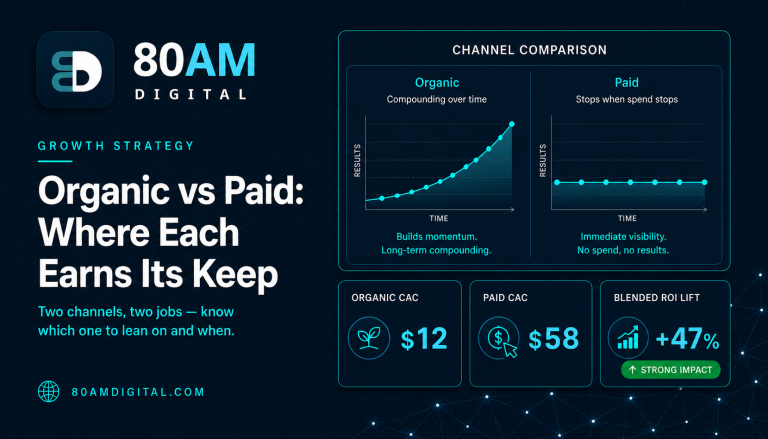
For DTC brands, organic is the channel that reduces customer acquisition cost over time — every category page ranking built today continues to generate revenue without incremental spend. The investment is front-loaded; the returns are ongoing. And unlike paid channels, the asset doesn’t disappear when the budget does.
If you’d like to understand where your ecommerce site’s organic growth opportunities are and which pages to prioritise first, get in touch.